Why Rules Stagnate Your Organisational Growth Strategy
I have had C-Suite Leaders admit to me that they feel misunderstood. Leadership is an incredibly lonely vocation at the top. You carry the weight of keeping promises to your customers while simultaneously trying to hold together the promises you made to your internal staff.
In the absence of innovation and progression, many organisations default to a safe haven of rules and compliance. In essence, this is the bare minimum and exactly why businesses stagnate.
I will share why compliance heavy organisations slow down momentum and how to build a team that challenges you to execute a real organisational growth strategy.

The Trap of Compliance
In the UK, we operate as a massive hub of services. 80% of our GDP comes from financial services, management consultancies, and law firms. These services rely on intellectual property, and thereby a heavy reliance on governance that has been commissioned by a recognised central body. In turn, this gives these firms and consultancies a sense of “legitimacy”, giving them “licence” to operate”.
However, legitimacy does not equal scale. Over time, when you solely focus on compliance, you push aside the unique selling points that actually differentiate you. You stop innovating. You create an environment where everyone nods along because it is easier to agree with the rules than to challenge the status quo. This is why smaller or bigger competitors take over your share of the market.
The current market is dominated by Millennials and Gen Z and their focus is much more on the promises an organisation keeps, relative to how “compliant” they are. Of course doing things properly is fundamental, however, when your business becomes a factory of compliance, you lose the spirit that makes a robust organisational growth strategy possible.
Defining Your True Standard
So the question becomes: What are the promises an organisation keeps? The promises you keep are conscious choices, and commitments you and your team explicitly agree to deliver; especially to your customers. When I think about promises in my own leadership journey, it comes down to brand identity, your story, and how you genuinely connect with your audience. Every time you show up, you are delivering micro promises that highlight your calibre and quality.
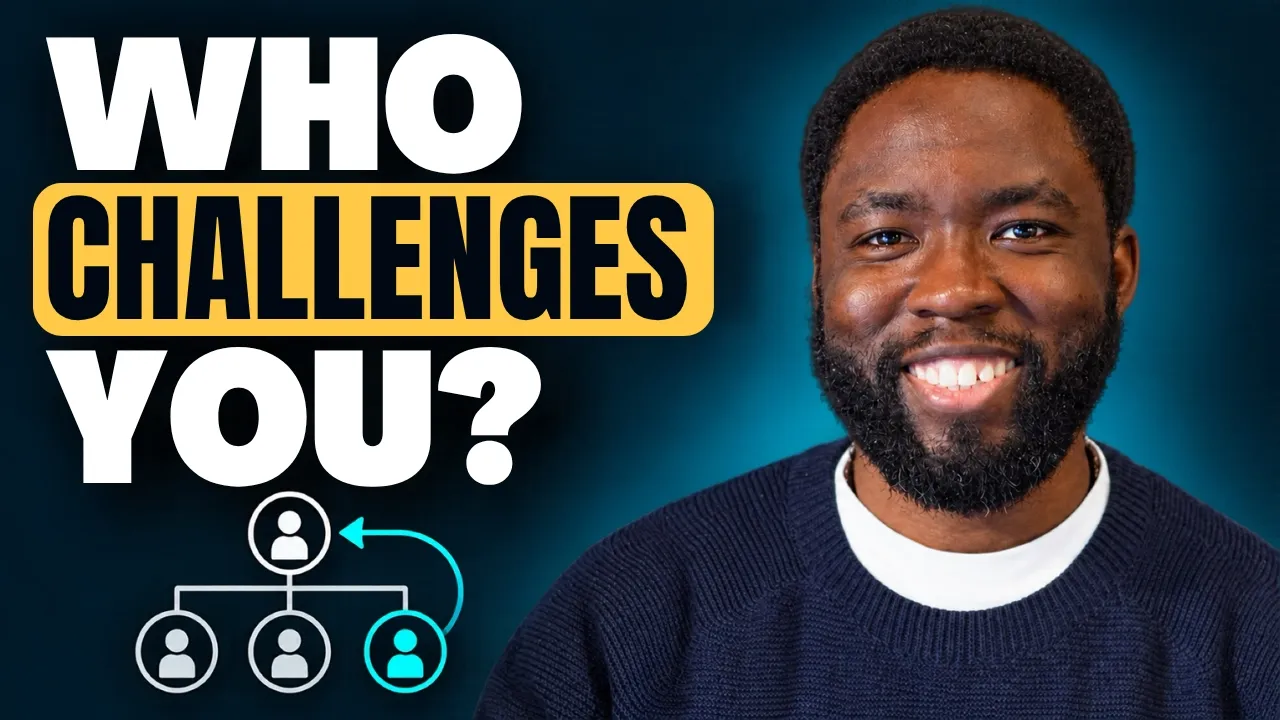
To keep these promises at scale, you need a balance of good managers and good leaders. Good managers ensure the baseline rules are met. Good leaders coach people into a space of real growth that is aligned to the integrity of the organisation. The real secret to unlocking this potential and fuelling your organisational growth strategy is intellectual diversity. You need a pool of people who think differently and can create a culture of challenge and support.
Years ago, during my coaching development, I learned a framework that changed how I view team dynamics. If you introduce too much “challenge’ without support, people feel anxious and defensive. They stop speaking up. If you offer too much “support” with zero challenge, you breed complacency. Everyone sits on a positive candy mountain where everything is fine, even as the ship sinks. You need both. You need support to encourage movement and challenge to ensure integrity and honesty.
Building an Environment of Constructive Friction
Creating a culture of intellectual diversity requires intentional infrastructure. You cannot just hope people will start speaking their minds. You have to invite different perspectives into the room and track the outcomes rigorously.
- Audit Your Current Roster
Before making any changes, you must understand what your business actually needs. Look at your strategic objectives. What promises are you trying to keep? Once you have that clarity, audit your current board or leadership team. Do they have the varied experiences required to deliver on those promises and drive your organisational growth strategy?
- Recruit For Different Perspectives
If your team agrees on everything, you have a serious problem. You need to recruit individuals who will professionally disrupt the peace. Bring in non-executive directors, co-opted trustees, or external advisors/ consultants who act as observers. You want people who are comfortable disagreeing and have valid reasons for doing so.
- Track Decisions Obsessively
As a programme management professional, I spent years working in the public sector, specifically within the NHS. Budgets are relentlessly tight. I have sat on countless programme boards where decisions were casually muttered because people were too scared to rock the boat. You must log actions, owners, and deadlines. Create a dedicated space in your agenda where a decision is explicitly recorded and tracked.
The Cost of Cognitive Homogenisation
We are currently navigating a highly digitised economy where artificial intelligence has created a homogeneous society. People simply cannot be bothered to leverage their own thinking anymore. I use AI for efficiency, but when it comes to deep brainstorming and leveraging raw human thought, it falls short. It is not human. It is not me.
Has AI actually made you more money, or has it just introduced more administrative work? Having a group of people in a boardroom who constantly agree with the same stuff is exactly like bad AI. It is an echo chamber of sycophantic nodding.
Intellectual diversity breaks that cycle. The friction of different human minds working against each other ensures that you are moving towards a solution that is alive, breathing, and innovative by nature. True growth requires the kind of cognitive heavy lifting that you cannot outsource to an algorithm.

Conclusion
Compliance shows you met the rules. Commitment shows you kept your side of the deal. The hard things are the good things, and building a team that holds you accountable to your promises is one of the hardest things you will do as a leader. Give the paper pushing to the managers. Your job is to focus on the standard.
Take a hard look at your leadership team this week. Ask yourself what kind of thinking is missing from the room.
How will you create clarity before your next big decision?
Understand. Reach. Expand.
Peace.
You can access the video here